Srbija
 Bosna i Hercegovina
 Slovenija

Pandemic worsened Croatians' financial problems and eroded trust in gov't and EU


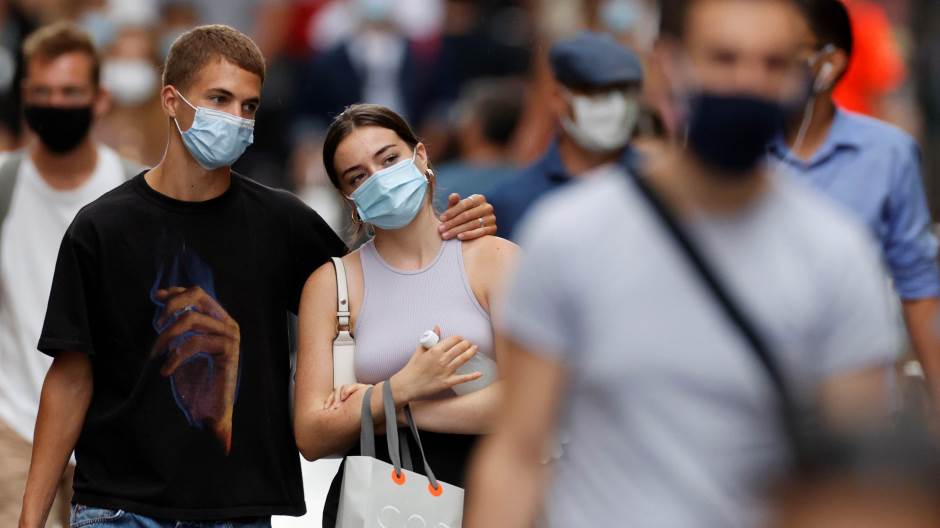
The coronavirus pandemic has significantly exacerbated Croatians' financial problems, compared to other EU citizens they nearly most frequently have problem making ends meet, and they are pessimistic about their future financial situation and put little trust in their own government and the EU.
These are the findings of a report on the impact of the coronavirus pandemic on the life and work of EU citizens, made by the Dublin-based European Foundation for the Improvement of Living and Working Conditions (Eurofund) on the basis of an e-survey conducted in April and July 2020.
The Zagreb-based Institute of Public Finance (IJF) on Monday published an analysis of the report, authored by Predrag Bejakovic.
From April to July 2020, despite a mild improvement of the situation regarding working hours and job security, a very unfavourable cumulative social and economic effect of the pandemic on citizens' lives, notably those of women and young people, has emerged, shows the survey.
The conclusion for the entire EU is that due to the very negative impact of the coronavirus, intergenerational and gender inequalities have strongly increased, says Bejakovic.
"The Eurofund report shows that Croatians cite sigificant financial problems (the problem of making ends meet is the most prevalent in all of EU), they are very pessimistic about their future financial situation and have little trust in the national government and the EU," said Bejakovic.
The survey, conducted in two rounds, in April, when a lockdown was in force in most EU members, and in July, when the countries and economies started to open up slowly, covered 87,477 respondents across the EU.
"The report has shown, among other things, that the status of young people aged 18-34 in the labour market has deteriorated due to an increase in unemployment. Also, from April to July women lost their jobs more frequently than men, and those women who kept their jobs had problem keeping their work-life balance. The coronavirus has had the most negative effect on women aged 18 to 34 because they were the ones to lose their jobs most frequently. On the other hand, the risk of losing one's job was the least for men aged 35 to 49," says Bejakovic.
The fear of job loss was most pronounced in Bulgaria and Greece and least pronounced in Denmark, Austria and Hungary.
"In Croatia, 8% of the respondents lost their job in that period, which is the EU average. The probability of job loss in the next three months was 19% in April and 11% in July, and in both months it was slightly above the EU average (15% in April and 10% in July) but it was still much lower than in Bulgaria, Malta, Greece and Portugal," the IJF says.
As for the assessment of one's own financial situation in the next three months, the survey shows that 40% of the respondents in April expected it to worsen, while in July one in four expected that to happen. Respondents in Denmark and Luxembourg feared a worsening of their financial situation the least, while those in Croatia and Greece feared it the most.
In April 47% of respondents in the EU said their household had difficulty making ends meet, as against 44% in July. In July Croatia was the EU country where difficulty in making ends meet was reported the most frequently (23%) and only 9% of the respondents expected their situation to improve in the next three months.
"Croatians were the least optimistic about their financial future," Bejakovic says, recalling that political analysts believe trust in one's government significantly determines to what extent a society can successfully respond to the coronavirus crisis.
"Respondents in Croatia, along with those in Poland, trust their national government the least. They also have the lowest level of trust in the EU (along with Greeks)," said Bejakovic.
This, he notes, requires adopting a clear communication strategy to acquaint citizens with what national and EU institutions are doing, as well as further promoting European solidarity.
Kakvo je tvoje mišljenje o ovome?
Pridruži se raspravi ili pročitaj komentare


Kakvo je tvoje mišljenje o ovome?
Pridruži se raspravi ili pročitaj komentare
NAJČITANIJE
















Najnovije








ZDRAVLJE





LIFESTYLE