Srbija
 Bosna i Hercegovina
 Slovenija



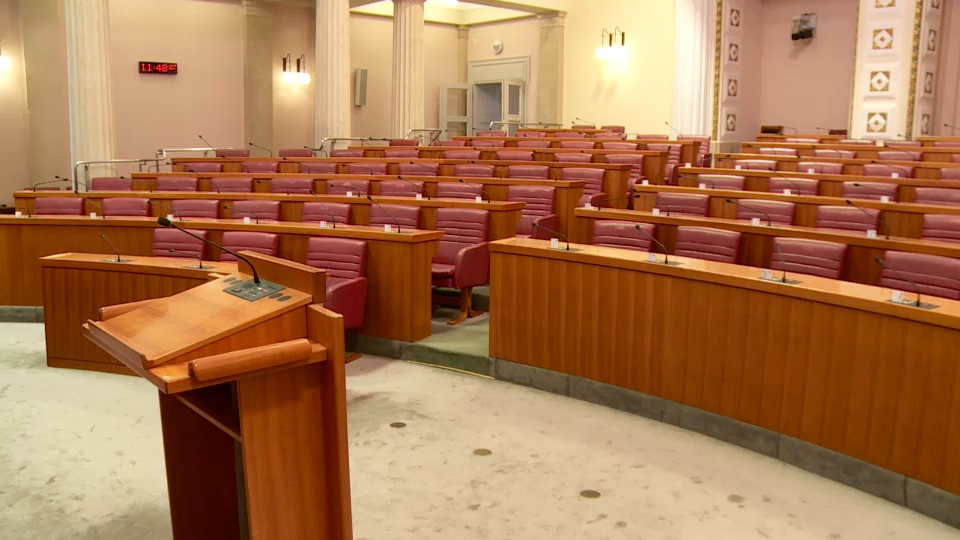
The government sent the Croatian language bill to parliament on Wednesday, regulating the official and public use of standard Croatian and ensuring systematic and expert care for the language.
Once adopted, this law will provide for the first time the necessary institutional framework for the care of the Croatian language and literature, enabling the unfettered development of the language for the benefit of the Croatian people and Croatian culture as a whole, Prime Minister Andrej Plenkovic said.
This law is aimed at ensuring a quality level of the Croatian language in official documents and in official communication with citizens, who are entitled to it, he added.
The bill is being tabled on the occasion of the 180th anniversary of an important event in Croatian history when, on 2 May 1843, historian, politician and writer Ivan Kukuljevic-Sakcinski addressed the Croatian parliament in Croatian for the first time, calling for the introduction of the Croatian language in schools, offices and the public life, given that everything had been in Latin since the 13th century, Plenkovic said.
He recalled the parliament's conclusion of 23 October 1847, proposed by Kukuljevic-Sakcinski, on the introduction of Croatian as an official language in public use.
"The aim of the law is to preserve the value of the language as a legacy through which speak the identity, history and culture of the people, while at the same time ensuring its development in step with the needs of the modern world, because language is alive," Plenkovic said.
By adopting this law, Croatia would join France, Slovakia, Poland, Lithuania, Slovenia, Switzerland and Belgium, which have a law on their language and its official use, he added.
Since the language is an intangible good and a mark of identity and belonging to a people, the government is obliged to care for the protection of and ensure the free use of the Croatian language, notably in times of globalisation, Plenkovic said.
This includes ensuring the legal grounds for its use and development and promoting the culture of the Croatian language in official public use, he added.
"This law does not restrict the freedoms of literary and artistic expression nor does it regulate private communication. This law does not restrict the legal application of the constitutional law on the rights of national minorities or the law on the use of the languages and scripts of national minorities," Plenković said.
Under the bill, the government should ensure the drawing up of a national plan of the Croatian language policy with a list of priorities and goals. It also recommends establishing a Croatian Language Council.
Kakvo je tvoje mišljenje o ovome?
Pridruži se raspravi ili pročitaj komentare


Kakvo je tvoje mišljenje o ovome?
Pridruži se raspravi ili pročitaj komentare
NAJČITANIJE




















Najnovije











ZDRAVLJE





LIFESTYLE




SHOWBIZ