


 Srbija
 Bosna i Hercegovina
 Slovenija



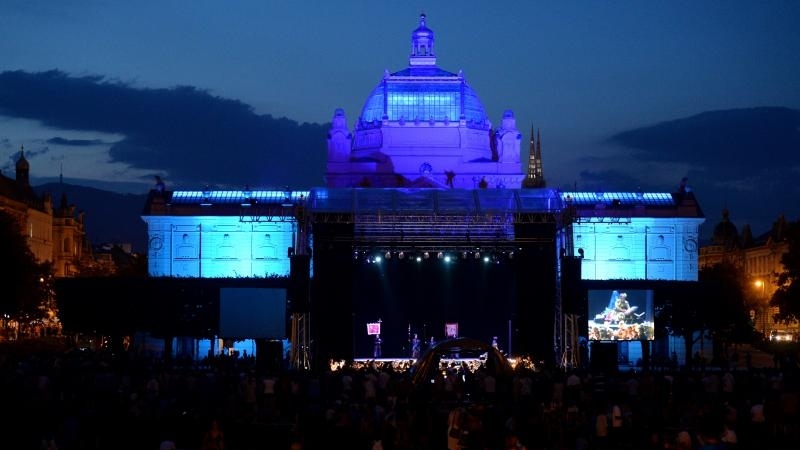
The light pollution of the sky above Croatia's capital Zagreb, as a result of the use of artificial light, is 16.9 magnitudes on average, exceeding the sky's light pollution in Hong Kong, according to survey recently published by the Faculty of Mining, Geology and Petroleum Engineering (RGN) in Zagreb.
RGN professor Zeljko Andreic regularly gauged the brightness of the sky above the faculty's building near Zagreb city centre for six years, and established that the average brightness of the night sky was at a constant level at all times, with the exception of seasonal differences caused by weather changes.
Nightly minimums, maximums, and medians of sky brightness change considerably due to weather conditions, often by two or three magnitudes, according to the findings.
Clear nights have less, while cloudy nights have more light pollution, with sky brightness being about 15 magnitudes on clear nights and about 18.2 on cloudy nights, Andreic said. Both readings are a little lower in the spring and the summer.
Compared with Vienna and Hong Kong, Zagreb produces disproportionately high amounts of light pollution. In Vienna, which has a population of about 1.7 million, the average brightness of the night sky is between 16.3 and 19.1 magnitudes.
A cloudy night sky in Zagreb is 1.3 magnitudes brighter, or approximately 3.2 more times, than in Vienna, while a clear night sky is 0.9 magnitudes brighter, or about 2.3 more times, Andreic said, adding that Hong Kong, which has an almost nine times larger population, causes less light pollution than Zagreb.
Light pollution can directly affect human health, as bright night lights prevent the production of melatonin in human bodies, which is thought to cause a higher incidence of breast, prostate, and colon cancers, as well as sleeping disorders and depression.
Hong Kong is notorious for its light pollution and is considered one of the most light polluted cities on the planet.
Follow N1 via mobile apps for Android | iPhone/iPad | Windows| and social media on Twitter | Facebook.
Kakvo je tvoje mišljenje o ovome?
Pridruži se raspravi ili pročitaj komentare


Kakvo je tvoje mišljenje o ovome?
Pridruži se raspravi ili pročitaj komentare