Srbija
 Bosna i Hercegovina
 Slovenija




In 2021, revenues of the informations and communications technology (ICT) sector in Croatia increased by 11 percent year-on-year to €6.1 billion, the head of an association of ICT businesses told reporters in a news conference on Tuesday.
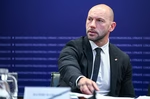
"The sector has been developing and growing since 2008, but there are still problems such as the non-stimulating fiscal framework for innovations, too high and too many levies, vague laws, a poor education system, and lack of quality experts - which all prevent development," said the president of the ICT group with the national employers' association HUP, Hrvoje Balen.
He said the sector's revenues last year accounted for 5 percent of the Croatia's GDP and that exports accounted for 28 percent of the sector's revenues. Its added value was over €2 billion and investment totaled €440 million, plus €96 million in research and development.
State agency Hina did not offer any figure on net profits of local ICT companies.
"The ICT sector has 46,000 employees and their number is constantly growing, but expenses are increasing much faster," he said.
"The energy crisis and the rise in living costs will now also have a big impact, but investing in people should be increased," he said, adding that the average monthly net pay in the sector was €1,345 last year, while in 2008 it was €800.
Balen said Croatia, Finland, and Estonia were the three EU countries which saw a decrease in the number of ICT professionals working there, by 2.8 percent, because of people going abroad, insufficient education, and staff shortages.
"The goal in the EU is to raise the current number of ICT professionals from the current 8.5 million to 20 million by 2030, and Croatia should do everything to cut the enormous labor cost an facilitate the hiring of foreigners," he added.
Kakvo je tvoje mišljenje o ovome?
Pridruži se raspravi ili pročitaj komentare


Kakvo je tvoje mišljenje o ovome?
Pridruži se raspravi ili pročitaj komentare
NAJČITANIJE


















Najnovije









ZDRAVLJE





LIFESTYLE





SHOWBIZ